Living with Multiple Sclerosis: What Eddie Taught Me About MS and Life in General
- Feb 6
- 5 min read

This is a conversation I will never forget and one I am not sure I would ever have had if it were not for the Digg Podcast.
I do not think I would have felt comfortable asking Eddie all of these questions outside of a podcast setting, but I am so glad I did. Sitting down and creating space for an honest conversation made all the difference.
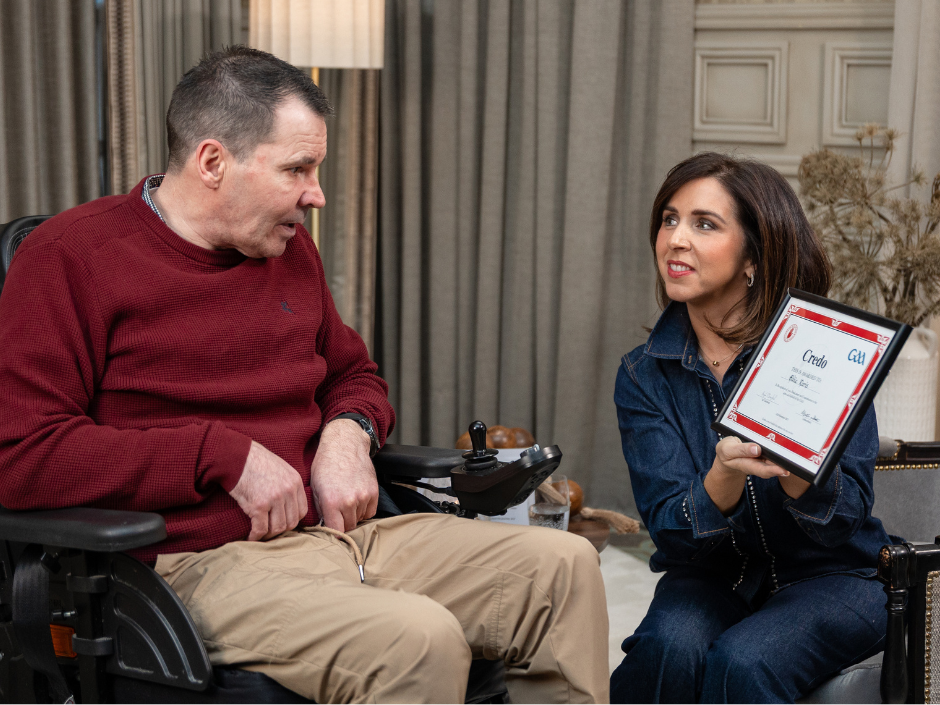
I sat down with Eddie Doris, a teacher, musician, Cookstown legend, and as I am legally obliged to say, my husband’s cousin.😊
Eddie lives with MS, Multiple Sclerosis, and he joined me on the Digg Podcast to talk about what life with MS is really like. Not the headline version. The real version. The one where you still laugh, still slag your mates, still want a good pint, even if it is a zero, and still find ways to live a full and connected life. I learned so much from Eddie and I hope you do too when you listen.
Words matter more than we think
One of the first things Eddie spoke about was language. He does not like being called an MS sufferer. He is an MS patient, yes, but a sufferer is not how he sees himself, and it is not how he wants others to see him either. That really struck me. So many of us want to say the right thing when someone is living with a diagnosis or chronic illness, but we sometimes use language that unintentionally takes away a person’s power and makes the illness feel like it has control.
Eddie is not in denial. He is not pretending that multiple sclerosis is easy. He actually said if he were allowed to describe it using stronger language, he would. He is simply refusing to let MS become his whole identity. That is a lesson for all of us. Be careful with labels. Ask people how they want to be described and listen.
The hardest moment is not always the one you expect
When Eddie was first diagnosed in 1997, at the age of 27, the shock was not fear about getting sick in the future. His first thought was the music. He was playing keyboard with a big Irish country act when one night his arm would not do what his brain was telling it to do. It passed. Then it happened again the next day while playing the church organ. Wrong notes. Tremor. Something just off.
When the consultant confirmed MS, Eddie described it as a bombshell. Even now, you can see the emotion when he talks about it, even though humour is always close by. But what really stayed with me was what happened next. Eddie did not crumble and disappear. He quickly adapted. He could not write properly with his right hand, so his principal told him to use his left.
And Eddie did. He practised for weeks, learned to write left handed, returned to the classroom, and continued teaching for another 16 years.
That changed how I think about resilience. Sometimes resilience is not a big speech or a motivational quote. Sometimes it is sitting at your kitchen table saying, right, we will do it differently then.
Staying connected is a form of survival
When Eddie had a major relapse in 2013, life changed more sharply. Balance issues. Vision issues. New symptoms. More lesions. And eventually, ill health retirement at just 43. As we talked, I could see how hard that was. Eddie loves people. He loved the staff room banter, Monday morning football chat, and feeling part of something bigger.
But his message was clear. You have to keep going.
Eddie believes that cutting yourself off can lead you down a very dark path. So instead, he stayed connected through the GAA community, organising school games, staying involved, staying useful, and staying present. He poured time and heart into that work and later received recognition for his dedication.
Sometimes, the thing that keeps us going is not motivation. It is people.
Independence is not one big thing. It is a hundred small ones
One of the most powerful parts of our conversation was Eddie talking about his wheelchair. Not in a sad way. In a, “this changed my life way.” His consultant said something simple but life changing. He told him that there was no point in being stuck inside. He would drive himself mad and he needed to be out. That led to practical support. Occupational therapy visits. The right equipment and real solutions.
Eddie talked about going into town in his chair for a newspaper and how a short trip often turns into a long social tour because everyone stops to chat. He spoke honestly about winter, ice, weather, and reality, and how a wheelchair friendly taxi driven by a friend allows him to stay social all year round.
But the moment that stayed with me most was this. His chair lifts up to bar height. To some people, that sounds small. To Eddie, it means eye level conversation. Being part of the craic. Being included. That is what dignity looks like. Access. Thoughtfulness. A world designed with people in mind.
It also reminded me of a previous Digg Podcast conversation with Shelly Cowan about the importance of disabled people having equal access to everyday spaces. Listen here.
This too shall pass is not a cliché when you have lived it
When I asked Eddie what keeps him positive on the tough days, his answer was simple, “Everything comes to pass.” He added something else we all need to hear, "Everyone has good days and bad days. Everybody."
If someone in your life is struggling, do not stay away
One thing Eddie said very clearly was that people should visit. So many of us avoid calling to see someone who has not been well because we do not know what to say, we are afraid of intruding, or we worry it will be awkward. Eddie’s message was simple. Do not let that fear create distance.
A message. A call. A visit. A bit of notice if needed. But do not disappear. Connection is medicine too.

The Digg lesson in all of this
Talking to Eddie reminded me that life does not stop because of a diagnosis. It changes, yes, but it does not have to shrink. Eddie’s story is not about being positive all the time. It is about humour, support, community, stubborn determination, and a mindset that says, right, what is next? And maybe that is the Digg lesson in all of it.
We do not always get to choose what lands at our door, but we do get to choose what we do after.
If you are living with MS, supporting someone who is, or navigating any life changing news, I am sending you so much love. And if Eddie taught me anything, it is this. One day at a time. Keep the people close. Keep the craic where you can. And remember, everything comes to pass.
What a man.
You can listen to our full conversation by searching Eddie Doris Digg Podcast on Apple Podcasts, Spotify, or watch below on YouTube.


